Editor’s Note: This is part one hundred eighty-three of a series of testimonies given by our aboriginal neighbors. We are posting these in an attempt to allow everyone to better understand just how badly Canada has neglected the first nations of Canada. These are the words submitted to the JRP Hearings, to Enbridge and to the Government of Canada.
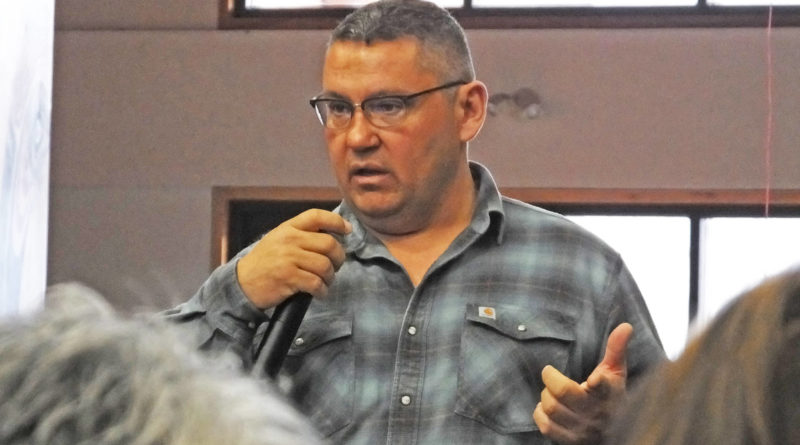
ORAL PRESENTATION BY CHIEF DOUGLAS NEASLOSS
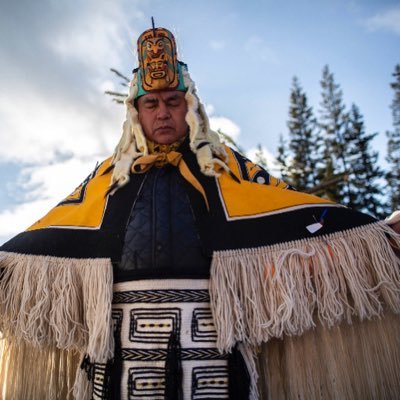
CHIEF DOUGLAS NEASLOSS: So hello. So my name is Muq’vas Glaw, which in the Xai’xais language means white bear. My English name is Douglas Neasloss. And I’m here today as the elected Chief Councillor of the Kitasoo Xai’xais Nation as well as the resource stewardship director, and as well as the lead guide for Spirit Bear Adventures.
But I’m also here to represent the wildlife as well who, unfortunately, do not have a seat on this table. As you know, I was involved in a lot of the setup, you know, prior to you guys coming and I really wanted to show you guys — you know — our close relationship to the wildlife that we have. So as you can see, it’s a big part of our culture. It’s a part of our — it’s all of our crests that we have, it’s a part of our artwork, it’s a part of our stories and songs.
So we have a very close relationship. So I think that’s very important as we proceed here today.
So I guess today’s presentation, I’m here to talk a lot about my work over the last few years, a lot of it in marine use planning. Basically, I started out as a marine use planning coordinator in 2005 to 2011.
Next slide.
So now getting to this overall process, the Joint Review Panel process, this has been a very difficult position for me as the elected Chief of the Kitasoo to proceed in Klemtu, in terms of giving our evidence. And you know, a big part of that is because my community was fairly divided on this process of whether we should continue or not.
Like I said, there was a lot of discussion around rights and title. There was a lot of discussion as well as not the appropriate consultation or accommodation. And we were sitting on a number of other tables with government right now working those out, both provincially and federally.
So it just — you know, through the panel members that we did have speak, like I said, it’s not the best representation of all of them. We’ve also had a lot of other members out on medical. Some of our key knowledge holders, unfortunately, were not able to make it. In particular, you know, Ernest Mason, Jr. was not here and like I said, he’s a guy, you know, that spent a lot of time, you know, out on the water.
And we only have a handful of people, really, that have boats or have access and get out and fish. A lot of people go out with him to — when they’re out there. So unfortunately, like I said, this is not the best representation.
And just the — you know, the overall financial support. This has been a very timely and very costly process for us. We also have a number of other issues going on. I’m not sure if you guys have seen the construction around the community right now, but we’re also engaged in an emergency housing — you might want to call it development, but knocking down about 15 homes.
And so there’s a lot of different projects going on from court cases to construction to court cases. So it’s just — it’s — like I said, this has been — just been a very challenging time.
So we understand that our community will — there’s other means to proceed with our position on the Enbridge project, but I just wanted to let you guys know. But nonetheless, my people did give their presentations, and hopefully you guys can take that message away, so…
So I’ll give a bit about myself. You know, I spent a lot of time as a young man out fishing on the — in our territory. It was usually — you know, every family would identify one person to go out and harvest and as a young man my family chose me to go out and harvest on behalf of my family. So I have four brothers and one sister. And like I said, I would have to go out, you know, when I was a young teenager.
I didn’t really like it much. I’d much rather, you know, be doing other things that I guess normal kids would do, but it was my responsibility to go out there and fish. And so I spent a lot of time going out.
I don’t know if you’re able to bring up the map.
So this is — yeah. This is the territory. So basically, Klemtu is right about there. I spent a lot of time as a young person going out and we’d go out usually the month of March every year. And we’d go to Kitasu Bay and harvest the herring eggs. And now that’s getting later and later, into April. But we used to go out and set herring eggs on hemlock trees.
We used to go down and take branches or sometimes the actual tree and go and, you know, anchor a log on the water so the log wouldn’t float away and tie a bunch of hemlock trees to this log and all the herring can come and lay their eggs on this — on this hemlock tree.
So that’s what people are doing right now which, again, made it challenging for a few speakers to even get up here today to present because we only have one — you know, there’s only this time of the year that you can get out and actually harvest herring eggs.
So as a result of this Panel hearing, I’m probably not going to have herring eggs this year because I think they’re just wrapping up with all the things right now.
But nonetheless, like I said, that’s a very important area for herring eggs and also halibut. A lot of halibut start to move in around that time, so I spent a lot of time with people like Charlie Mason out there fishing, I’ve gone out with Moses. And like I said, my father — step-father used to take me out there and we used to do a lot. I spent a lot of time doing that.
So that happens in March, and then right after March is finished we move into the seaweed. And seaweed, I’ve travelled to a lot of different places harvesting seaweed, down to the west coast of Price Island, all these areas here, Milne Island.
Aiken and Laidlaw Islands also have seaweed as far down as Moss Pass; so also a very important time that we usually go out and harvest in May every year. So I’ve gone out and still continue to do it today as much as I can.
You know, we often travel a lot, you know, all different areas to go fishing. I’ve gone up as far — we call this area — well, the people here call it Hell’s Gate. It’s right at the top end of Matheson. In our language we call it Tequanomkakas (ph), which we have an old story attached to that which means giant human because the rock formation looks like a giant forehead. So it’s supposed to be a giant human that if the canoes got too close, they would pull your canoe down.
But that was also a very important fishing area; still is today. Usually we get a lot of rock cod, lingcod in those areas. All throughout Matheson Channel and Finlayson Channel are very important.
I’ve gone as far down as the south end of Aristazabal to go fishing. Same with the south end of Price Island, again fishing for lingcod, red cod, snapper, so a lot of the different species.
Just go back to my presentation.
So you know — and a big reason why we’re out — you know, we were out harvesting these resources, like I said, when you have a large family, it was — we’ll go back one more still. Sorry.
So you know, a big part of going out and harvesting these resources, you know, unfortunately, because I had such a large family, it was very costly, the food prices. As you know, Klemtu, we only — there’s only two ways to access Klemtu, and that’s by boat or plane.
Just to get to Vancouver and back, for instance, today costs roughly $900, return. So it’s very expensive for us.
So it just made sense to go and spend $50 to go, you know, get some gas and try to pool your money and you’d have, you know, perhaps sometimes 10 people out there trying to go out and harvest the resources. Whether it was clams or cockles, you know, et cetera, with all the different species.
You know, with that, as I spent as lot of time in the outdoors when I was younger, I really developed a passion. I just wanted to spend a lot more time. So my early teens, when I was about 17 years old, that’s when I decided to — well, my first job was actually with the Co-Management. You can go to next slide.
So my first job was actually with the Co-Management Fisheries Program and I did that for about two years. And a lot of it was creek walking, doing the estimates of salmon. You know, counting salmon in all the different areas or clearing the trails.
And then, by kind of a fluke chance, I was asked — I was actually hired just for a two-week contract with a Japanese film crew that had come in to — because they had just heard about the Spirit Bear, and they wanted to come and do some filming.
So there was this Japanese film crew, was called TV Asahi was supposed to come here and actually do some filming of the bear. But they were supposed to — they had this Japanese girl that was really supposed to interact with some of the local people. So they hired me to go out.
And, you know, my experience in the Co-Management Fisheries is I took a course, a bear guide course, and it was actually from an ex-trophy hunter. And my — once I came out of the course, the guy really talked a lot about aggressive bears or predacious attacks so I actually came out more scared of bears than anything. But, anyways.
So now they hired me in tourism, which was a complete contrast. Here I was now chasing bears. So it was interesting, you know.
So then I took on the job and it worked out very well. It was my very first time seeing a Spirit Bear. And I remember that was October of 2000 and we were out for a seven-day trip. And on the last day, at the last hour, we saw the Spirit Bear.
And to me, I’ve never seen or even heard of the Spirit Bear as a lot of my community members have really kept that confidential in worries that people would hunt. So that was always a big concern as to, you know, the people that — right now, we still have a lot of trophy hunters as well as resident hunters that still come to our territory. So that was still a big concern.
So anyways, after my first time seeing the Spirit Bear, I remember after waiting the last hour, this mysterious white bear comes out of the forest. And it was pouring rain. And, you know, it was just an amazing experience just to have something — it was just abnormal to see this white bear come walking out the forest and come down and grab a salmon and about two minutes later, he was gone.
But just that experience was enough for me to stick around in tourism. And from that day forward, I knew that this would be my career for the rest of my life. You know, I just, so a lot of my effort, you know we were just starting to get tourism off the ground at the time. Like I said, I had no prior experience in that at all.
So I started to work with a number of people, the Economic Development Corporation at the time hired a consultant to come in and his job was to really train someone in the community and, you know, eventually they would take over the tourism program. So his job was really to phase himself out after about four or five years. And that was right in the original tourism strategy of 2000.
So I spent — basically, the next four years, we really were mainly focused around kayak guide, taking people in kayaks. So I spent the first four years as a guide, kayaking around the Kitasoo/Xai’xais territory. Excuse me.
And I would take people, I would go on trips paddling around Swindle Island up around Princess Royal Island. Taking them to a lot of the cultural sites, to a lot of the rivers that my people have always gone to. You know to places like Destu, which is a very sacred site for the Kitasoo people. And you know just so people could have an experience there.
And for me, it was a learning experience as well. You know, at the time, I didn’t know a lot about my culture back then because both my grandparents passed away when I was fairly young. My grandfather passed away before I wasn’t even born and my grandmother passed away when I was about 9 years old.
So it was really a big gap in my life. So I felt that I’d better start to focus a lot of time and effort on really trying to study the culture and really get to know the history behind my people.
So really getting out there and experiencing a lot of that gave me the excuse to spend time with the Elders. And that was a challenge as well because there’s a lot of family stories that people cannot share, you know, with other families or with other people.
So I had to kind of earn the trust of the community and making sure that I wasn’t going to represent those stories in the wrong way or misuse, you know, those stories or those places.
So we went through a fairly in depth community consultation process to really find out what we can do and what we can’t do in tourism. And just the whole concept of tourism was a very tough thing for the community because now we’re introducing a new industry to the community and it just — it made it very challenging.
And the question was brought up, and I remember this quite vivid, that: What are we doing in tourism? Are we selling our culture? You know, and that was a major concern. And so — and a legitimate concern is that we had to be very careful.
We have a lot of other cultural sites such as burial boxes. We have watchmen poles that stand in our territory. We have pictographs and petroglyphs. So we had to go through, with a lot of our people, you know, in terms of what was proper so — which worked out very well.
So anyways, after the four years of kayak guiding, we soon found that, you know, that really wasn’t the proper market for us. It was often, a lot of kayakers, I hate to say it, are very cheap and didn’t want to spend the money. A lot of them would come with their own kayaks and it just made it — it just wasn’t right for us.
And so a lot of times we’d either break even, and a lot of times we’d lose money. So we found out very quickly that wasn’t the right formula.
So we really started to shift our focus more to the cultural wildlife tours and that has now become the bread and butter of our tourism operation.
That was also about the time that we were starting to develop our Land Use Plan. I wasn’t directly involved with the development of the Land Use Plan. We had a lot of great leaders help develop that. But now I’m part of the implementation stage of that, of the Land Use Plan.
And, you know, I think, you know for me, I really wanted to help be a bigger part of that. And under our Land Use Plan, we protected 48 percent of our territory. And, you know, that was huge.
So now, the people who developed that Land Use Plan has basically locked out any future opportunities we have for any forestry or mining opportunities. And there was a lot, it was in a way taken away. But also in a way it was a blessing because it also helped protect our resources that rely, you know that are in those protected areas.
So that was really important. So I felt it was really important for me to really focus on trying to look at industries that are non-extractive. And to me, tourism was a big part of that.
So if I could focus a lot of my energy into, you know, really trying to focus and develop a successful tourism operation then I knew that, you know at that time if I wasn’t involved, no one else was going to do it because I was the only guide at the time, you know, taking people out.
So I did a lot of work with one of our Hereditary Chiefs and that’s again Charlie Mason or Ernest Mason Jr. And he was able to teach me a lot about the territory and show me the routes or how to work with bears or the cultural sites.
And I knew that, you know, I would have to take his knowledge and also try and pass it on to other youth. Because I knew that in order for this tourism operation to be successful, I would have to pass on his knowledge and that, you know, other youth in the community could be involved.
So I made that my goal was to really try and involve as many youth as I could. And we had to expand this operation to the point we’re making money. And we lost a lot of money for a lot of years. It wasn’t actually until just recently that we really started to make, you know, a bit of profit.
And, unfortunately, our community also had to learn how to do business in terms of running the tourism operation. Like I said, it was a fairly new industry. And so we went out and basically, you know, I’ve been really trying to focus a lot of my work on just training the youth.
So every year, I hire five youth. Every year. And I try and hire every year a different youth, you know, so they can get an experience.
And like I said, when we took the tourism discussion to the community, it was never about money. And they made that clear when we had our discussion around tourism. It’s not about making money.
There was potential — the community realized this right at the beginning, there was potential to make millions and millions of dollars off the product that we had here. I mean, here we live in a unique place where this is the only place in the world you’re going to find the Spirit Bear. We also live in the last remaining intact rainforest on the planet. And I think the community started to realize we had something special here.
But they said that it’s not about the money. So don’t go out and basically start building these massive resorts. And don’t — you know, keep it, we want very slow and steady growth.
And you know, my community didn’t want a whole ton of tourists here, you know walking around the community or buying up all the groceries in the store. It was all those kind of issues that, you know, we really had to think about.
So we made that our goal as to, you know, let’s –it’s not just about making money, let’s try and get as many people employed as we can through this. And I have always said, if we broke even, we’ve done our job.
We hired some people, we break even, you know, we’ve done good. But unfortunately that’s not how you run a business. We also have to make a decent profit in order for this business to stick around.
So we went through a few managers over the years, and marketing, and they even tried to throw me in some of the marketing at some point and I was terrible at it, it’s certainly not a skill that I have, but like I said, now we’ve done very well.
When we started out — originally started out, we started out as a two to three man operation and we actually used to run our business out of this little float house that’s halfway — I don’t know if you guys have seen that brown barn shaped building we have down at the dock. But we used to cram six people in there and — but we knew right away that we would have to expand and get a proper accommodation, get some proper boats and that’s what we did.
So gradually throughout the years we started to employ more people. We just recently put in that Spirit Bear Lodge and just added an extension onto that, now we can — now we have 12 rooms down there, we can accommodate a total of 24 people. So that was huge for us.
And now today I’m very proud to say that we hire close to 20 people. Last year we had 18 staff and this year we’re going to have more, and you know, everything from, you know, boat operators, to cooks, to guides, to people cleaning the hotel, you know, just — I’ve just been very pleased with that.
So I’ve put a lot of blood, sweat and tears in terms of the development of that operation and, you know, hopefully again it’s an opportunity because again it’s an opportunity for the youth to get out and really interact with our territory and learn the culture and just, you know, be a part of that environment. So that was very important.
However, as a guide, I really started to see a lot of things happen out in the field, and like I said, when I started back in 2000 I remember going out with, you know, our Hereditary Chief Charlie Mason and I remember going out to a place like Coots Inlet and Coots Inlet was an area that was abundant with resources.
You can go there and set a crab pot. And I remember going out there and we set a crab trap out there and we pulled it up and there was basically about 40 crabs. And the crab was so abundant that they were just falling off of the crab trap, they were just all over it, and I just thought that was amazing, I just thought it was a really unique experience.
And I remember going to other places even like Carter Bay where there used to be tonnes of salmon and I remember I was up there one day with a bunch of clients and I remember — you know, basically the whole bottom was black and I just thought it was just the bottom of the river and then all of a sudden I see this part of — this white bottom just started to open up and then I was trying to, you know, figure out what it was and I didn’t realize it was a seal that was swimming down the middle and it was opening up all the salmon and you could see the bottom of the river.
But now if you go back to those places today it’s a huge decline in salmon numbers, a huge decline in crab stocks. And places like Coots Inlet, if you go try and set a crab trap there today it’s very challenging to get a crab because the numbers of tourists, you know, have just grown significantly over the years and we have a — we find it very challenging just to go out and get food for ourselves. So like I said, we go out there and try and set — you’d be lucky to get a few crabs in those places.
You know, it’s quite commonplace now today that you see 10 to 15 boats anchored in Coots Inlet. It’s a very beautiful place. But like I said, you get every boat in there that’s setting crab traps — you get every boat setting two or three crab traps, and they do that for two or three months. They’re really hitting that place quite hard, not including the commercial industry that’s just come in and crab fished those areas just prior to the tourists coming around. By the time the weather gets a bit decent that we can get out with our small boats everything is gone.
I really — again, just started to see a huge decline in the aquatic resources and also, you know, and even the hunting, the bear hunts. You know, as I first started to guide it was quite commonplace that you would see dead bears or you’d find skulls of dead bears in different places. And, you know, poaching was a big part of that, but the trophy hunt that just opened up, you know, a week and a half ago, is still a big issue and trophy hunting is still — it’s something that we have to deal with on a regular basis.
Now, my community doesn’t support the trophy hunt, but you know, again we still continue to see them, and even in parks and conservancies people are — these hunters are still allowed to hunt, and this is not including the resident hunt that still happens and as a Canadian or British Columbia resident someone could go and hunt a black bear for $20 or a grizzly bear for $80. They can shoot a wolverine for $8 and a wolf you don’t even need a tag.
So it’s those sort of things that I’m really worried about, that you know, these are the other industries that we have to face in our community that, you know, are issues that we still have to try and deal with.
The overfishing is another issue. Again, you know, it seems like the stocks slowly start to rebuild and then they get hammered by the commercial fishery again, not including what the sport fishery is taking, which is another industry in our territories that are having huge impacts.
So those are the things, like I said, we’re trying to be very proactive and deal with those things. But like I said, I knew as a guide I would not have the voice as just a tour guide to be able to deal with these issues, so I knew that I had to become more involved in the — whether it was the political arena or whether it was just in resource management. So I decide to make a huge jump and get involved in marine use planning, and again, like I said, that was back in 2005 that I decided to do that.
So we can go to the next slide.
So in 2005 I was hired as a marine use planning coordinator and basically my job was fairly simple; is to collect the thoughts of the community and develop a marine plan, and this was really stemming out of the land use planning process.
Now, my people try to keep a — you know, when they developed the land use plan, tried to integrate the marine plan with that but unfortunately because the federal and provincial government see those things as two different issues they had to separate them, even though my people see it all as the same.
So I have been quite involved in, like I said, developing the marine use plan, and then I’ve also helped develop some things on the land side such as the — well the implementation.
So I’ve been doing a lot of work, you know, with the — well, both on land and marine stewardship. So I’ve been helping develop a lot of the park use plans that we have — yeah, the park plans. So we just finished developing one for fjord land or the mussel in Kinoc.
Like I said, now that we’re starting to have, you know, more bears there, more people are starting to hear about that and more tourists are starting to flood up to our areas, and like I said, that’s caused a lot of — you know — concern for not just the aquatic resources but also for the cultural sites.
You know, as we open up our door in tourism we started to see more and more of our cultural pieces going missing. So it’s just started to create a big problem.
And also the rest of the world in terms of the media that come into our territories and want to write stories about these spirit bears or grizzly bears, black bears, it just created a bit of a challenge for us as well because now that, you know, everyone just started to hear about the spirit bear back in the mid-nineties, prior to that it was kind of a bit of a secret.
But like I said, people started to talk about that and then we started to have, you know, a lot more people starting to circumnavigate Princess Royal Island in search of the spirit bear. So it’s quite common that you’d go out and you would see like 50 boats all out there looking for the spirit bear.
So we had to be very careful, which really led to our work with developing a watchman program. So we developed a watchman program in our territory and we developed them so that they can get out and monitor and patrol our territory to make sure that, you know, people are being respectful while they’re here. Like I say, we don’t mind that people want to come and see things and visit but we just want to make sure that they’re doing things respectfully.
So we hired a watchman probably about eight years ago and again helping him trying to develop this program and really give them the proper — we’re trying to get them recognition from the different levels of government, both provincial and federal, but they also go out there and enforce the laws of our nation as well.
So now I’m going to get into a discussion around the marine use plan. Now, I know I submitted a lot of this stuff as evidence to you guys, so I’m going to talk a lot more of the process in terms of the development just so that you guys know where the marine use plan has come from.
And one of the most important things in the original discussions we had in the development of the marine plan was this statement from one of our Hereditary Chiefs. And he says, “The marine use plan sets out to balance our culture, the economy, and the ecosystem to ensure a future for our grandchildren”. And that was always the basis of our discussion.
And like I said, this was — you know, a lot of time and effort was really put into this and, you know, a lot of these guys who have come to our table, it was really for the future generations that they were developing this plan.
So when people had come to my meetings — and I have had a total of 87 meetings to date — they have come and had not been paid at all. So they’ve come as volunteers because they see this as — the development of this marine plan, as very important.
So Kitasoo planning and why; so the Kitasoo/Xai’xais have always had land and marine use plans, and like I said, you know, our — a lot of this falls with the chieftainship of our territories. And even the council when the Chiefs make a decision will step down and let them because they were the original stewardship and the Band Councils are there just to administer the dollars and programs. So they are the rightful stewards of the territories.
We wanted to make sure that that was very clear. And they’ve come to all of our marine use planning tables with that direction and, you know, explained their management, the traditional forms of management to our people.
And the rest of this really falls on our vision that the community had.
So it rests in oral traditions, and where and how we harvest our food. We have an obligation bestowed us — bestowed upon us from our ancestors to ensure the resources, the things we depend on will be here for future generations. The people are becoming more interested in our lands and activities and are impacting the lands and resources, and impacting our ability to survive as Kitasoo/Xai’xais people.
Consequently, we have developed a land and marine use plan that tells our story to the outside world and how we’re going to manage our lands and resources. Our right to implement this plan comes from our Aboriginal rights and title from our connection to the land for thousands of years. The Kitasoo/Xai’xais are not opposed to development. We invite people to come and work with us and listen to us and then, through mutual respect and understanding, we can begin to work together.
And like I said, that’s always been the case and, you know, we’ve always said we’re fine, you know, having people whether it’s tourists, or whether it’s commercial fishermen, or sports fishermen. But we want things done sustainably and that’s always been our direction and we’ve had major, major challenges with a lot of those industries.
And I just think it’s really important that the Joint Review Panel, as well as Enbridge knows that, you know, these are the challenges we have to deal with all of these other industries and now we’re talking about introducing a new industry here.
So — and we can’t even — you know — we’re having some major challenges trying to deal with these ones.
So when we were developing the Marine Use Plan, we wanted to make sure that this included everybody. We wanted to make sure that we weren’t forgetting anyone in the community. So we tried to bring in a lot of different people. So we brought in people — it’s very important that we brought on people from the Treaty group; we brought in people from the food fish committee.
And we have a food fish committee here and there’s basically three people that have been designated by the community and they have developed a food fish policy which I helped develop with them, or helped revamp the one that was really revised quite some time ago. But these — this food fish committee gets out and they monitor the territory and if stocks are low in certain systems they close the fishery both — mainly for our own people, but they also contact DFO and ask them if they can close that for the commercial or any sport fisheries as well. So that was very important that they be included.
We also included people in the forestry sector. It’s very important to have the Elders, we have an Elders Council here. The Watchmen, like I said, we have two watchmen but really our whole community, anyone out on the water plays the role as a watchmen as the eyes and ears of our territory. The Band Council, the Economic Development Corporation, the Hereditary Chiefs, community members, the AFS and salmon enhancement programs. So it’s really important — and also the youth was also another component that I forgot to put on the slide.
But everyone was — everyone would come to our marine use planning table and the intent is that they would come here, we’d have, you know, a good discussion of brainstorm sessions and that they could take these — take all of the information that we had discussions on. They could take it back to their — each board and committee that they sit on to each one of these places, and also they could take it back to their home so that every family was aware of what was going on in the development plan. So it’s very important that, you know, everyone was included and everyone knew what was going on.
So pulling together existing information. So the Kitasoo have been involved in planning for a long time, you know, I said there’s been a lot of different work, whether it’s been with the AFS, or the Treaty tables, the Economic Development Corporations, and there’s also been other strategic plans on Council. So the Kitasoo Marine plan pulls together all the work to better communicate with non-Kitasoo/Xai’xais. Sorry.
So just getting back to the development of the Marine plan, it was really important that we kept everyone informed of what was going on, and so we basically launched into three — we did three major studies in the community and one of them is the traditional ecological knowledge study and that was identified — well, I’ll go into these in a bit more detail.
So the traditional ecological knowledge study, the community needs study, and the socioeconomic study. And like I said, these were basically the backbone of the development of the marine plan. We also had 87 meetings, you know, again from all of those people I just mentioned in the slide before this, and again, it was really important that, you know, everyone come and, you know like I said, we didn’t have the money to pay these people to come and be a part of this. So a lot of time and effort was really put into the development of this plan.
We’ve also had community quarterly newsletters that went out and I think that number is a bit off actually, it should be a bit higher than that, but I have 12 on there. We had seven information products, five open houses and 10 presentations to community groups such as the school or Treaty groups, just to make sure, again, everyone was involved.
And you know we — whether it meant we had to go park ourselves over at the cafe or the coffee shop to make sure an get this message out in terms of helping get everyone’s thoughts in one place here.
So these are the three studies. Now, like I said, when I was the Marine Use Planning Coordinator, I helped conduct a lot of these studies and one of them was the Traditional Ecological Knowledge Study. And basically, we identified 25 key knowledge holders in the community and then we went back and we asked them: Where are your harvesting areas? Where are the cultural sites? Where are the ecological areas such as spawning grounds, kelp beds, large migration — or migration routes, or large gatherings of birds, nursery areas? With this study we were able to collect over 5,000 futures.
So it was quite a significant study and that’s the work you guys see hanging around on the walls here today, all of the maps here. So we have a good idea of what’s going on in our territory with every species.
And I also should say with that study, it was really important that we also wanted to capture how things changed over time as well, and a lot of very similar stories came out. Where people used to say, I used to go out and harvest a lot of the aquatic resources right outside in the bay here in Klemtu, and that has now changed over time and now people are having to go further and further away for food. So that’s been a big challenge.
And the next one was the Community Needs Study, and this one was — there was actually three parts to this study. So we identified — it was identifying community needs, but the three parts — we did one on informal trade. So we wanted to find out what sort of trade people used to do a long time ago; when people talked about trading herring eggs with Kitimat and Bella Coola, or yeah, herring eggs for eulachons.
Eulachons used to be a once abundant resource and we used to even have a run of eulachon up in a few of our systems, Poison Cove as well as Coots Inlet used to be full of eulachon and now those resources have now — well, have been depleted.
I actually haven’t even seen an eulachon in my lifetime up at this area. So we still try and go out and look for them and there’s just nothing left. On the Central Coast, they’ve almost been decimated both from Bella Coola, Klemtu, and Wuikinuxv territories. So that’s been, you know, very unfortunate.
But that was — those were huge trade items, both for the eulachon as well as the eulachon grease that people used to harvest. We used to have — we actually used to have one of our Elders, his name is Roy Robinson, I was really hoping that he would get up and speak through this process. But like I said, it’s a big challenge to get up in front of public here to give these sorts of presentations, but Roy Robinson, he used to camp out in places like Poison Cove and he used to live out there and harvest the eulachon. Then, he used to go out to Kitasu Bay and trade with the people that would go out there and harvest herring eggs. So he was telling me lots of his stories and I just was — it’s amazing that, like I said, now we just — we don’t even have those resources available today.
So anyways, we also not just wanted to find out what people traditionally traded, but also how has that changed over time, and it’s changed drastically. So now, we still have a bit of herring eggs here, because like I said, we’ve been — we’ve done quite a — well, a decent job I guess, in terms of trying to protect some of the aquatic resources such as Kitasu Bay. We’ve been able to keep out the commercial fishery.
So we still trade but, I mean, it’s really changed now. A lot more people are starting to trade for herring eggs for groceries and so that trade has really changed quite a bit. So sometimes — and we have a policy here in our community that we do not sell any seafood and our community is very strict about that and if anyone does their food fish permits are stripped away from them and we wanted to make that clear and it’s supported by the community. So if you’re going to anything you can trade, and that’s all we do.
So — no still on the same slide.
So the next study we did was for sustenance and we wanted to find out, you know, what sort of food people were — what sort of food people traditionally ate and also, I guess the main question was assuming the resources were abundant and you had unlimited access to these resources, what would your diet look like now?
And people started to say, well, you know what? If there was abalone here I would love to have that once or twice a month, or once or twice a week. Or I would like to have halibut and salmon once or twice a week.
We went through this with every species and it really gave us a good indication of how much seafood people require to sustain themselves as well as their family. And every coast — every community on the Central Coast and as well as the North Coast did the same study and we followed the same methodology to find out, you know, these sort of numbers.
And it turned out that the smaller communities like Klemtu, like Wuikinuxv, required more seafood because of our transportation. We just didn’t have access like the larger communities did. So we required more seafood.
And also — we also had a feasting component to the study as well, so we asked people how many feasts do you host per year. Like I said, there’s no way of predicting that. There could be one, there could be 10. And a lot of that was dependent on the potlatch, which is our main ceremony that we really do everything, whether it was singing to dancing to story-telling to governance, passing of Chief names, passing of coppers, you know, adoptions, traditional weddings. A lot of those things are conducted in our potlatch.
And like I said, if there was four deaths this year, there’s going to be — next year there’s going to be four settlement feasts as a part of — that’s a part of our tradition.
So it was really important that — we want to get an indication of how much seafood would it take to have any feasting sort of things and even such as the event for JRP, for instance, we have things like Aboriginal Day that we do these gatherings for. We invite neighbouring nations to come and participate and be with us, so it requires a lot of seafood.
And — but people started to say, well, if we — you know, this is what we would ideally like to see in our potlatch, but like I said, because some of the challenges of those resources not being there, you know, people identified those things. Like if people had abalone, they would say, well, I would require 100 pounds of abalone, you know, to host a feast that would feed, you know, a potlatch, you know. And we went through that again with every species, so that was really important.
But it also wasn’t just looking at the current situation with these aquatic resources or what people would like to have. We also looked into the next 20 years and into the next 50 years into the future, in terms of being able to calculate what sort of aquatic resources that we would require to again sustain the families through all these different studies. So that was a very important study that we were able to do.
And then the last one was a socio-economic study. And this one was very important as well because we went back and asked them — you know, identified community employment statistics, education levels, job desires, and then we looked at the status of current industries and potential in each of those industries.
And that really gave the leadership some clear direction in terms of where we need to focus our efforts. And there was no sense in developing or trying to buy more fishing licences if we didn’t have fishermen here in the community. And so people started to say, well — actually, people did want to get more involved in the fisher — in the commercial fisheries sector.
But a lot of people started to say we want to expand in tourism, so it allowed the community to, you know, go out and focus and say, okay, well, how can we go out as leadership and go out and develop, you know, the capacity that we need. What sort of training do we need? What sort of people do we have to bring in? So that was very important that we do that and, again, give us some clear direction.
So these three studies were basically the backbone of our marine use plan and that was the basis that — the one that we submitted to you. And the one we submitted to you was in draft form, so…
Next slide.
So basically the marine use planning process — the marine use planning meeting process; again, I was hired as the marine use planning coordinator. My job was really, along with our technical team — so we had a very good technical team. We had Ken Cripps and Erin Haight.
And basically their — our jobs were to pull together all the background information, you know, on every industry or other fishery, how things are fished, when they were fished, where they were fished, and also pull together any policy and management questions and just have a good brainstorm session about, you know, each one of these industries or species.
And we really were looking at — the main discussions were really focused around three main topics, and that was the best management practices. And this was really looking at our — the Kitasoo/Xai’xais position or best management practices, the economic opportunities, and also skills and capacity requirements.
So the next one is “What is in a Community Marine Use Plan”; next slide.
So like I said, we put a lot of time and effort into the marine plan, and these were some of the key priorities that we wanted to focus on. And like I said, a lot of these were very similar to the rest of the central coast.
Co-jurisdiction was our — one of the main key priorities, is that we just want — we just want better to understand — we just want more authority. We want these decisions to be made on a co-jurisdictional basis. We want more involvement in the management of these areas. Like I said, we have our traditional forms of management and, you know, sometimes the way the species are being managed right now we just don’t think it’s sufficient enough.
We know that, for instance, Department of Fisheries and Oceans looks at managing single species and that really just focuses on one thing. We believe in protecting large areas and — you know, that protect multiple species.
Territorial-based economic development was also very important for the community. As you’ve seen in some of the previous slides, you know, there is, well, roughly, $13 million, you know, that comes out of the Kitasoo/Xai’xais territory and not a dollar that comes back to my people. So we wanted to make sure that we were able to focus on trying to get access to those and also try and limit the ones that also we did not think were sustainable, so that was very important.
Government revenue sharing; like I said, the government is making a ton of money on these areas, so we just wanted to make sure that, you know, some of the money is flowing back to the community.
Impact benefit agreements was also very important. We wanted to make sure that we start to develop protocol fees with all the different industries. And we’re not there yet, but we started to first focus on the tourism industry. So you know, I’ve sat down with our tourism group and was able to help develop some of the protocol agreements with all the lodges.
Like I said, we’ve developed — you know, we’ve even started to cap it off. Like I said, we couldn’t accept too many because we’re starting to get a big flood of tourists to the area. So we capped it and said — you know, so that everyone — just so we’re not getting flooded with a bunch of people.
Also, we — now we’re looking at working with sport fish lodges in developing also protocol agreements, you know. But in my opinion I think every industry, every user of our territory should be paying a fee.
Now, our community right now, we sink about $80,000 into our watchman program every year and we have to brunt those costs, unfortunately, because — I mean, that’s why we’re hoping to go back to all the other industries. And we’re not asking them for a profit, we’re not asking them for a small fee. And once we — you know, if it’s charging a tourist $10 per day to be in our territory, that would go right back into our watchman program and that would help — that would help manage the territory.
So like I said, we’ve been able to get buy-in from all our tour operators that operate in our territory and, you know, roughly we get about anywhere from $7,000 to $8,000, you know, from — for those fees, which has been very beneficial because it alleviates some costs for us that we, as a community, have to absorb.
So again, if we can focus on the other ones, that would be nice. And like I said, now we’re planning on expanding our watchman program. We’ll be hiring two more this summer to get out and help patrol as we have such a large area, so…
Also, some of those fees could potentially go into stock restoration and rehabilitation, and this has been, you know, another key discussion that we had. You know, some of the resources have declined so much that we really want to just focus our efforts on trying to bring back some of those stocks.
Klemtu has done very well in terms of doing some of that. You heard the presentation from Larry Greba, as well as our other co-management crew that basically get out and they basically — and I’m not — haven’t been involved in — a whole lot with that. But basically, they’re flying, you know, fry and smoults out to these different systems to help rebuild some of those systems.
Priority access to food, social and ceremonial is another priority. Bottom trawling, again, was another huge issue that the community is dead set against because it damages, you know, the bottoms or it’s a lot of the by-catch that’s being caught in those areas, such as eulachon.
And then offshore — well, oil and gas is the other one. So that was another one that was identified as a major issue. So we’ve developed a position in our marine plan as a result of — yeah.
So First Nation marine use plan components; so each community’s plan provides direction on monitoring and enforcement, governance, best management practices for all marine industries and resources, economic development, capacity building and marine spatial planning. And so basically this is kind of the basis of our marine plan.
Our marine spatial plan was really developed as a result of the traditional ecological knowledge study, so that really gave us some clear direction. I said we were able to identify some key areas. You know, for instance, a lot of the people started to say — maybe if you can go to the map, maybe I’ll just point this one out. That’d be great.
So a lot of people identified, for instance, this area here has a juvenile rockfish area, and a lot of people would say that they caught a lot of, you know, juveniles in that area and that was a rearing area. And, so it’s really important that we wanted to still protect those sites because we didn’t believe people should be fishing.
So once we developed a marine spatial plan, we wanted to make sure that those areas were blocked off. And we believe that if we were to protect this area, and what we know from traditional knowledge of the local, you know, tides and currents, that if you protect this area it would feed the rest of the coast of Aristazabal.
So when we protected—actually, it was already an existing rockfish conservation area, so I think it was in 2005, if I’m right, that it was protected as a rockfish conservation area. But we wanted – so we expanded on that a bit more in our spatial plan.
And the reason why I wanted to mention this is because there was a quote I was reading on this sport fish lodge website that’s up in Borrowman Bay up there. And they basically said when they were going to put in that rockfish conservation, they thought it was going to be the worst thing that happened to their lodge. And they said that it was – after a few years it was the best thing that’s happened because now you protect the juveniles– it basically feeds the rest of the coast. You protect the larvae source and you protect the rest of the coast.
So we applied that same formula to a lot of other areas, and we believe that protecting the heads of the inlets is also very important to protecting the larvae source and will feed the rest of the channels so …
I’ve finished that one. Next.
Next.
Next.
Next.
Next.
Carry here.
So Kitasoo position on oil and gas. We had a lot of discussion around this so, as I said, this was long before any Enbridge discussion, but this was our position in the marine plans: reliance on a marine environment is a defining factor for Kitasoo/Xai’xais culture, identify and economy. As I said, you were able to hear some of the stories over the last few days on that.
Oil spills are significantly a threat to the culture and our way of life and, consequently, our rights and title. And as such, the Kitasoo/Xai’xais support a moratorium on offshore oil and gas development and do not support oil and gas exploration, and do not support large shipping of oil and condensate.
And I think that was very clear and that’s something, unfortunately, that we’re also having to deal with is the LNG and I think that’s another major issue that, again, the transportation — it’s those increase — as I said, you’ve heard some of the discussion from some of our people in terms of human error, so I’ll just briefly discuss on that. I know that was a sensitive slide so move on to the next one.
How oil and gas can impact the environment? A significant body of evidence has already been presented to the Joint Review Panel on the impacts of oil spills on marine ecosystems. I’ll just keep that one as simple as well.
How oil spill can threaten the Kitasoo/Xai’xais way of life? So hydrocarbon contamination on food impacting economic opportunities that are dependent on healthy and pristine ecosystems. I think that was my last slide. Should I go, oh no, I still have more, never mind. I’m almost halfway, guys.
— (Laughter)
CHIEF DOUGLAS NEISLOSS: I know dinner. I’m sorry. I didn’t think it would be this long. Okay, sorry. Next.
Working with the First Nations to govern our territory — so this just goes over — I’ll just do some of this very quickly and briefly. I know a lot of people are getting hungry. But I’ll move on to the next one.
So history of planning on the Central Coast. So the Kitasoo/Xai’xais, Heiltsuk, Nuxalk and Wuikinuxv communities have all had marine use plans. We all started the marine use planning process roughly around the same time. Well, like I said, now all the other communities I’m sure had their own, but really sort of engaged more in a more formal process.
So the four Nations have been working together since 2004 and we found out that we had a lot of very common values, interests and concerns, and so there was no sense in really just trying to develop individual marine use plans. And we started to recognize that there’s more value in working together.
So a lot of people — which has been really great to see — have really started to drop the borders that we’ve had. You know and sometimes it’s divided the communities and unfortunately. But now people are starting to drop those borders and put the resource first, and that’s been the main focus of our marine use planning process.
So we’re starting to move toward the collaborative governance, research, stewardship, monitoring, and enforcement. So these are all the marine use plans that each of our communities have developed and I should say, that now that each one of our communities have developed a marine use plan, basically, what we wanted to do is sit together around the same table and really look at all the issues that we had as a community. And, you know, try and find out what things were very similar.
Like I said, we had a lot of very similar concerns. Whether it was with commercial fisheries or tourism, or you know. So we had a lot of very similar interests and concerns.
So basically we set up this other organization. It’s called Central Coast Planning Implementation Structure which we set up on this large board called a CCIRA; otherwise known as the Central Coast Integrated Resource Alliance. And we basically wanted this to be made up of two representatives from every community. So one technical person — so I sat as the technical when I was involved as the Marine Use Planning Coordinator, and also we’d have one political representative.
And then we also had someone that would sit on the Central Coast Governance Committee as well as this Central Coast First Nations Fisheries Council. And the whole point of it was to really harmonize our plans, and which I guess I’ll go into a bit more detail in the next slide.
So, well, now, I’ll just briefly touch on this. We don’t have to go and do a lot of detail. But basically, in terms of really trying to work out and find some similar things, if there was agreement amongst our four Nations in terms of what should go into the Central Coast Plan, basically if there was agreement, it would just go right into the plan altogether.
If there was a gap, if something was missing — so maybe three of the Nations basically said, you know, they agreed on an issue, but one Nation forgot to have that discussion, we’d go back and have that discussion and they would either take it back to the community, and come back with a decision.
If there was disagreement, it would always go back to the community. So again, just finding out that we had a lot of very similar things and that the community was involved throughout the whole process.
Collaborative implementation of marine plans. So resource use protocol agreements, increased commercial fisheries access, coastal guarding watchman network, natural resource office which we’ve just started to set up these resource offices now. So that is what I work as a manager of now.
Implementation of marine protected area networks through government planning processes.
Improved capacity building and working collectively to protect First
Nations culture and identity. Protect threats against Aboriginal rights and title.
So, at the end of the day, I think just hearing all the stories from my community, you know just considering all the factors, I really hope, you know, when you guys — if you three are the people that will be making a recommendation, I really hope you consider the lives and the people that have to live here, the wildlife, you know, and the food.
Like I said, you know, companies are going to come and go but, you know, we’re here to stay. And I think that’s very important, that we’re not going anywhere.
So I think the three things I really hope you guys walk away with is you know, just consider the food, the economics and culture and, you know, hopefully again, you take away our position and, again, the position from the community and their council, that we do not support oil tankers on the coast nor do we support the pipeline.
So with that, I’d like to say thank you guys for coming, and I hope you guys enjoyed your stay here.
Thank you.
— (Applause)
THE CHAIRPERSON: Chief Councillor Neasloss, I just wanted to confirm: Am I correct in understanding that your oral evidence is complete now, that there is no more oral evidence that you’re wishing to provide through the community?
That was my understanding, but I just wasn’t clear on some of the remarks that you made.
CHIEF DOUGLAS NEASLOSS: Yes, I would say all the oral speakers are finished. There is other information that we may have to submit as late evidence, so if that’s an option we’d like to do that. So I’m sure we can continue that throughout some other processes. But all the speakers are finished, yes.
THE CHAIRPERSON: Thank you very much.
JLS ……For What It’s Worth