ORAL PRESENTATION BY MR. ERNEST MASON III

Editor’s Note: This is part one hundred seventy-eight of a series of testimonies given by our aboriginal neighbors. We are posting these in an attempt to allow everyone to better understand just how badly Canada has neglected the first nations of Canada. These are the words submitted to the JRP Hearings, to Enbridge and to the Government of Canada.


ORAL PRESENTATION BY MR. ERNEST MASON III

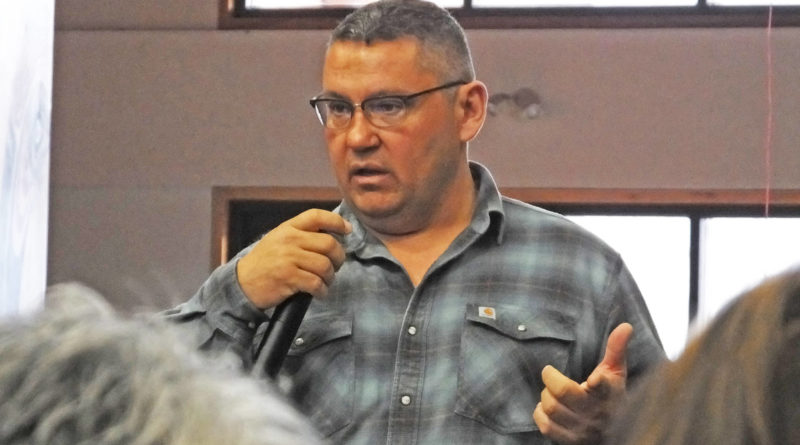
MR. ERNEST MASON III: Do I have to go next?

Okay, I’m not a public speaker so bear with me here. My name is Haay-maas Niis’muu-tk. It was put on me by my grandmother, the late Marianne Mason. My borrowed name is Ernest A. Mason III.

I am strengthened by my partner Sandy Hankewich who stands by my side through the good and the bad, as well as my family does.

I’m 39 years old and I’ve witnessed lots of changes in our territory in my time: A huge depletion in our traditional foods. The Department of Fisheries and Oceans overfished species to a point that is now closed to our people. We are already having to pay the price for other peoples’ mistakes.

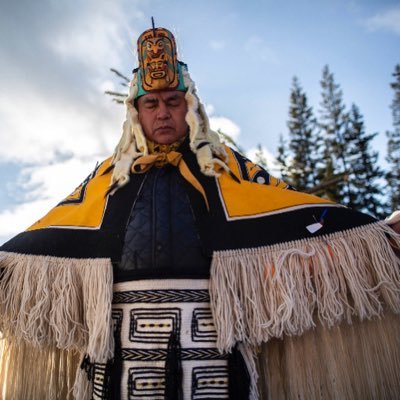
I am part of the singing group that you witnessed in the opening of the meetings. We’re trying to regain our culture the best we can as the traditions and the Native way of life is very important to us.

I’m the Co-Management Fisheries Dive Survey Manager. And I’ve got approximately 17,000 dives under my belt so far throughout the Kitasoo Xai’xais territory serving our foods. So I know exactly what’s at risk in the water because I see it every day.

You gain a new respect for the ocean once you spend as much time under water as I have. I have two daughters, Alyssa Marshall Mason and Jessie Lynn Mason, and neither of them know that the huge threat that their future is in with the possibility of the oil tankers passing close to or over their food supply.

My daughter, Alyssa Mason, who is 15 years old, loves her seafood and counts on it as a huge part of her diet as she eats all of the seafood’s. Jessie is just two and a half months and hopefully there will still be some seafood left when she’s old enough.

I also have two sisters, Beth Mason and Deanna Duncan, who you just listened to speak, and one brother, Mark Mason. My brother is out on the boat at this very time harvesting herring eggs.

I grew up in Klemtu my whole life and I remember as a kid going out on the boat catching fish, hunting deer, just walking along the beach with my brother, just having no worries in the world, not knowing that one day I’m going to have to be sitting across a Panel trying to describe why this is important to us.

Lots of my experiences cannot be put into words because they’re just — they just seem so precious and they’re just one of those moments that you’re going to have to grow up living.

We have a territory around us but it’s still been fished out and what we have left is at risk with an oil spill now. Our kids will have to pay for the oil spill. It’s not the cost of cleaning it up; it’s not the cost of trying to contain the spill. It’s all about the price that our kids and our grandkids will have to pay in the long run. The question is why is this company willing to put our kids’ future at risk.

I grew up as a commercial fisherman with my dad. We travelled the coast catching salmon. I was one of the lucky ones to experience growing up in the boat, living off the sea, living off the land. Some people say they want their childhood back. I’m pretty happy with mine. I grew up very fortunate, thanks to my parents.

We grew up in the land like of west Price, Price Island, west of Aristazable, Laredo Channel, Kitasu Bay, Pidwell Reef up in Kinoc. We’d have bonfires and picnics and just walking along the beaches looking for treasures or just whatever we can find on the beach. I want my kids to walk on those same clean beaches and have similar experiences.

My name is from the Kinoc mussel territory, Miyamiagulus. It means the salmon spirit that takes you throughout. I’m the son of Haay-maas Niis’muu-tk, Ernest Mason Jr., and my mother Edna Mason.

Haay-maas Niis’muu-tk is a Hereditary Chief from Kinoc in the mussel inlet territory who desperately wanted to be here but due to medical reasons with my mom he was staying by her side. He’s a great man taking care of a powerful lady. I wish he could have been here too, they could have told you some of their experiences. They’re a lot more powerful than anything that I’d have to say.

My grandfather, Earnest Mason Sr., who was also one of the Hereditary Chiefs from the Tsimshian territory, so that allowed me and my family to harvest foods from the whole Kitasoo/Xai’xais territory.

My father taught me all the places we’re allowed to harvest and the times of the years that we were to harvest certain species. He also owns a trap line on the west of Aristazable Island that spreads between Clifford Bay and Hague Rock. He also points out the creeks and the territory that has fish traps and fish weirs and that proves the importance of the territory’s history and the importance of the creeks that it has to the families which we hold stewardship over.

The medicines that we used in the past we still use today, such as weekaas. You guys would know that as devil’s club. And also the bark from the trees we use that to weave into cedar hatch, as you’ve seen that we used in the dance regalia. If you walk the riverbanks you’ll see all the evidence, all the CMTs which are culturally modified trees.

Also through the stewardship we close off the river systems when the stocks are weak for the sockeye and the coho as we see fit throughout. Our people respect that and we do not overfish it so we are trying to manage our own territory. We just try to work the stronger rivers just for the needs of our community and we shut down the rest for conservation.

We find this very important as part of our culture and in showing respect to our animal life. And now through tourism we show people from all parts of the world, which is one of our main attractions, which is the Spirit Bear, this is one of the biggest main — biggest reasons to try and maintain the river systems because they eat the salmon that return from year to year.

My father is also part of the local food fish committee so he’s very careful to not overharvest any of the species so we can conserve for future generations, which was also pointed out by our great-grandfather, Andrew Robinson, who would always say, quote, “If you take care of the land the land takes care of you”.

I felt I had to speak and say a couple of things about my concerns with the oil tankers travelling through or around the Kitasoo/Xai’xais territory, putting our lifestyles and lifestyles of our neighbours as well all at risk.

As you can see we have a lot of support from the neighbouring communities, as they have our support as well. We have the same concerns. We, as the Kitasoo/Xai’xais, are very glad the surrounding communities have left the comfort of their homes to come to support in the discussion with the Joint Review Panel so they can see that we are serious about what we want.

What is at risk with the high possibility of an oil spill, or when it does happen — everybody says they’re not going to happen but you watch the news everyday there’s a new oil spill somewhere.

So what is at risk in our territory; we have the seal, the salmon, rockfish, deer, the bears, including our Spirit Bear, the herring, the crabs, ducks, wolves, geese, sea lions, sea urchins, sea cucumber, mussels, barnacles, clams, geoducks, abalone, seagulls — I mention seagulls because we also collect the seagull eggs.

I’m sure I’m missing lots of important species but that’s just a small portion of what’s in our territory. And we harvest most of those species to put in our freezer which helps us get through the winter. Our people count on the fresh seafood’s to make it through the winter due to the high cost of food.

The barnacles and the mussels, which are mainly in the intertidal zone, which is a main diet for some bears and wolves, I work out on the boat three-quarters of the year and I notice a lot of bears just constantly eating the mussels and the barnacles, even though there’s a huge salmon run taking place in the river nearby. Their diet will be devastated in the case of an oil spill.

When an oil spill happens in the ocean, people catch the ducks, people catch whatever else is swimming around in the oil. No one thinks about the diets of the land animals. We, as the people, must make everyone else aware and speak up for the animals who cannot speak for themselves and not only worry about the risks to ourselves.

One of the biggest things to be affected will be the kelps and the seaweeds. That’s in the intertidal zone and will have no escape from an oil spill, so much of the animals count on kelp, juvenile fish hide in it in order to survive. Sea urchins count on it as one of their main diets. Animals eat it to get their salt intake, such as the bears and the wolves, deer, et cetera, et cetera.

We also harvest a type of kelp that’s called porphyra. It’s a type of seaweed and it’s only harvestable a certain time of the year. It’s a huge part of our diet and it’s also used for trade for eulachons with our northern neighbours. We also trade herring eggs with other tribes for eulachon grease. Trading is a huge part of our lifestyle and we need the oceans to be clean in order to keep harvesting our seafood for our families and also for trade.

As a child, I covered every corner of our territory with my dad, Ernest Mason Jr. He took us into just about every bay and every channel; he taught us the ins and outs of the territory. He would tell us where he would pick seaweed, places like Rudolph Bay, West Higgins, Larkin Point, Lombard Point, Weeteeam Bay, Delaney’s Point, the bottom end of Price Island. Lots of places in the bottom Price don’t have names; and other places up in the Laredo Channel.

Also where he would catch sockeye, like Higgins Pass, Weeteeam Bay, the Laredo Channel, et cetera, et cetera. The list will go on; it’s spread out throughout our whole territory that you could see up on the map there.

He would show us rock paintings and carvings in places like Meyers Pass, burial boxes, Kitasu Bay throughout the Laredo Channel, which mark the sites — burial sites of our late Chiefs, our ancestors.

The herring will be a tragic loss for our people and a bigger loss for the aquatic life that feed on them. We count on the herring eggs, and the salmon, rockfish and halibut, count on herring for food as well. Kitasu Bay, Weeteeam Bay, Clifford Bay, Kettle Inlet, West Higgins, as well as East Higgins all have pretty sizeable spawns just about every year. We can’t risk losing that herring as it is a major part of the life cycle in our territory, as it is in neighbouring communities as well. We do not want to risk what we have left.

I worked with the Co-Management Dive Survey Program for about 20 years, surveying species such as abalone, sea cucumber, crab, prawn, geoduck, sea urchins, macrocystis — that’s a type of kelp — and clams. Six out of seven of those items I listed will be immediately impacted by a spill, and unfortunately probably won’t recover if there is a spill — when there is a spill.

I also work part-time with the Salmon Department doing stock assessment for the fisheries, counting salmon up all the rivers. We have 29 river systems in our territory, and we keep a pretty close eye on them.

I would like to thank you guys for coming to our territory, listening to our concerns. We’ll take this back to our government and let them know that this is real and we are taking the threat very seriously.

In closing, I would just like to show respect to the past and present Hereditary Chiefs, Elders, elected Council, and all the members who share the same common goals, which is to become self-sufficient, a community that can work with the resources in our traditional territory.

We, as coastal people, need to speak up, raise our concerns, and just pray that it doesn’t fall on deaf ears, as our children, our nieces, nephews are counting on us to put up a good fight. And hope you understand why we don’t want to put our supermarket at risk.

I can almost say for a fact that people in the city would not want to run a pipeline over or through Superstore or Safeway or Save on Foods, all the places that you guys shop. How can it be acceptable to do it to ours? Why do we even consider it?

I feel we, as the coastal people, have as much rights to protest and speak up for our rights as people do on the news when they protest anything about their concerns. You see it every night on the global news.

This is real for us. We are being threatened with all our foods and the wildlife is being put at risk of extinction. That’s one of the small things that everybody is overlooking with this pipeline. I’ve heard somebody earlier say that you cannot eat money; neither can the animals.

I speak for my children because I’m worried for their future. I speak for our community because I’m worried for their future.

Haay-maas Niss’muu-tk does not support the pipeline or tanker traffic in our territory.

Thank you for listening.

— (Applause)


  JLS ……For What It’s Worth

Print Friendly
Share
This entry was posted in Aboriginal Testimony, BC Salmon Under Attack, BC Wildlife, Everything about Enbridge, Human Rights Abuse, Imporatant First Nations Issues, Important B.C. Issues, Important Canadian Issues, Our Environment, Social Injustice, Sport Fishing, The Oil Industry. Bookmark the permalink.

Comments are closed.