Apr 292012
 

Editor’s Note: This is part one hundred seventy-four of a series of testimonies given by our aboriginal neighbors. We are posting these in an attempt to allow everyone to better understand just how badly Canada has neglected the first nations of Canada. These are the words submitted to the JRP Hearings, to Enbridge and to the Government of Canada.


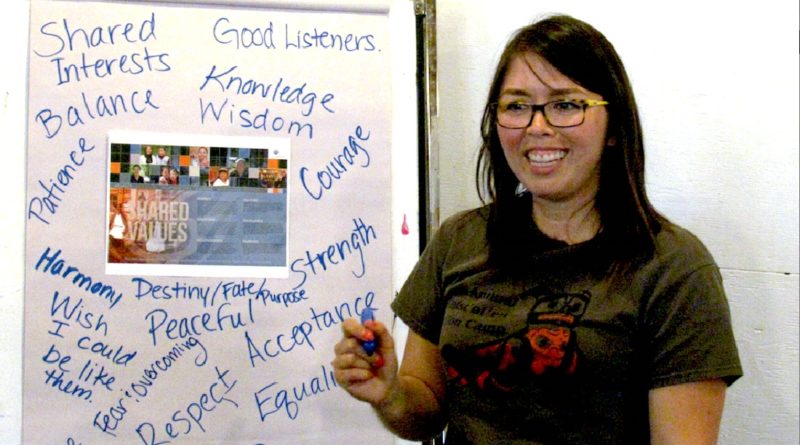
ORAL STATEMENT BY MS. MEAGAN MacDONALD

MS. MEAGAN MacDONALD: My name is Meagan MacDonald. I’m a little frazzled. I just found out that I was speaking. I was expecting to speak tomorrow evening, but I’ll go ahead. I’ve got it written down luckily.

So yeah, I do not speak for the Kitasoo/Xai’xais people. I am visiting here from my hometown of Victoria and I’m here by invitation to teach at their school. I signed up to speak for my own reasons before I knew of the plans of the Band and the community.

Back in Victoria, we make a point of acknowledging the Lakwungan (ph) people when we meet on their land. Today, I hope it has been made abundantly clear whose land we are on.

Like I said, I’m here in Klemtu to teach at the school. I’m here to speak as a teacher because I feel that there are two reasons my profession is impacted by the personal — or proposal at hand; the human and economic capital that is invested into education and the futures of these particular children and the cultural heritage of the country and national interest.

I work here by invitation of and under the supervision of the Kitasoo Education Authority. My job is to educate their children in terms of human and social development, and particularly in terms of preparation for careers and leadership roles in their community.

The staff at the school have invested time in accessing additional funding for programs such as the culture and language program and the new supporting emerging Aboriginal stewards program, which prepares students for careers in marine resource extraction, monitoring and management.

The students in my class range from ages nine to 14. I have a third of a generation in that room. They tell me daily that they want to grow up to work in the hatchery, to fish, to work at the farm or the plant, to be divers and other aspirations in the local economy.

Five teachers at the school work an average of 60 hours a week in order to best prepare these students for a life of economic self-sufficiency. While money is irrelevant to the experience of the school, it seems to be the terms that public interest has been defined thus far.

Should any action be taken that would in any way jeopardize the marine resources these students depend on for their sustenance today and hope in the future, I challenge you to come up with a monetary sum that could compensate for the Education Authority’s investment of economic and human capital and for the economic loss of reducing this land community to the low income state dependence that characterizes the national averages east of here.

Second, I’m here to talk about myself and the 28,000 other teachers of this province. I’m trained in the British Columbia curriculum, which teaches a narrative of economic expansion and annexation by HSBC and the Northwest Company.

We are meant to tell the story in a romantic way, as though it was a simpler time when people didn’t know any better. We are meant to tell the story as though it was such a distance past that there was a different mindset, that we are meant to give the pioneers and profiteers the benefit of the doubt that they meant the best and they humbly wanted to spread the good word of venture capitalism and industrial production.

Every year since those texts have been entered in the cultural canon of British Columbia, more and more supplements have been added to admit the truths, that 150 years of colonization is not long enough to be considered ancestry or to not affect us today, that not even the church believes in the discovery narrative anymore; that the land of British Columbia is, in fact, unceded, that conquest is not true; the reserve system was designed for the purpose of prisoner-of-war camps rather than homesteading and that the coast and the Chilcotin have not been settled by armistice nor Treaty, contrary to the textbooks.

My intention is not to give a history lesson, my intention is to say that the rest of B.C. not only is learning better, but is getting wise to the actual brief and grave history of British Columbia. No longer are nations fighting individual battles in isolation, the whole province knows better.

We know better than to believe that this land and water is under-utilized or up for grabs. We know better than to think a company can have domain over ecological unique land and waters. We know better than what has been said about the safety of the project because we have seen pipelines fail and tankers crash.

We know better than to think that this will be the first ever successful clean and unharmful pipeline, because not even Enbridge believes that.

I spoke to you today as a teacher. Whether you take that to mean a person with a professional specialization in British Columbia historical narratives and cultural dissemination, as a person who has invested her career to serve the interests and growth of the youth of this province, who stands to lose the most, or as one of the workers that supporters of the project claim to be acting in the interests of.

I want to make it clear that my professional opinion as the acceleration of tar sands development to bitumen pipelines to Enbridge Northern Gateway Pipeline to tankers on this coast to inadequate consultation and consideration of indigenous voices and to the contemporary land grabs hurts my sector of B.C. workers and it hurts students and is not in the national interest.

— (Applause)

THE CHAIRPERSON: Thank you.  

  JLS ……For What It’s Worth

Print Friendly
Share
 Posted by at 2:38 pm

 Leave a Reply

(required)

(required)

You may use these HTML tags and attributes: <a href="" title=""> <abbr title=""> <acronym title=""> <b> <blockquote cite=""> <cite> <code> <del datetime=""> <em> <i> <q cite=""> <strike> <strong>