Mar 122012
 

Editor’s Note: This is part one hundred seventeen of a series of testimonies given by our aboriginal neighbors. We are posting these in an attempt to allow everyone to better understand just how badly Canada has neglected the first nations of Canada. These are the words submitted to the JRP Hearings, to Enbridge and to the Government of Canada.


ORAL PRESENTATION BY MR. ARTHUR STERRITT

MR. ARTHUR STERRITT: Thank you.

My name is Art Sterritt. I have two Gitga’at names. The first name I was given some 40-odd years ago was Miyaan xaa. I was so proud when I got that name because it means Chief of the Slaves. And when I got that, I thought I had been made a Chief, and I can remember saying to our Hereditary Chief at that time, my father-in-law, that I was so proud to be a Chief, and he said, “Don’t get too full of yourself,” he said, “you’re the guy that feeds them.” That’s the kind of humble way that people put you back in your place.

I’ve come to learn that Miyaan xaa could mean the executive director because really, in fact, I have been a chief slave to the Gitga’at, to the Tsimshian, to the Coastal First Nations for the past 30 years, whether it’s in my role as President of the Tsimshian or President of the North Coast Tribal Council, which included Haida and Tsimshian and Nisga’a, or whether in my role as one of the inaugural commissioners on the B.C. Treaty Commission elected by all First Nations in British Columbia, or in my latest role as the executive director on behalf of all of the Coastal First Nations from Rivers Inlet to the B.C./Alaska border.

I more recently was honoured to be — to get a higher name, a more adult name. The name is Gitwaaltk Tsm’Haida. That’s a warrior name. We come from a long line of warriors.

While the Gitga’at people take great pride in their peaceful nature, there have been times when we have had to war with our neighbours, or people have tried to come amongst us. I, myself, am a son of Wii, who’s the Chief of the Wolves of the Gitxsan Nation.

My father was involved in a war. He’s a World War II veteran who was involved in the Netherlands in eradicating the invaders there. My uncle, my namesake, landed on the beaches of Normandy three days after D-Day. He went on to make a career of being a warrior and fought in Korea, Suez, was involved in the rocket program for Canada and spent his whole life in the Army.

The Gitga’at, on the other hand, when they tried to enlist at that same time, were asked to stay home and provide food for all the warriors that went to Europe and to the South Seas, to provide food to make sure that our troops were well fed as they fought for this country.

I can remember one of our Chiefs who’s passed, Tzu’axha, he said, “When the government came to our fishermen as they were fishing for our soldiers, they asked if our people would be happy to pay a tax”. Fishermen were not taxed before that. If they would be willing to pay a tax to support the war effort and our fishermen said absolutely. Tzu’axha had a piece of paper that said that that tax would be gone after the war.

He lost the piece of paper, and apparently so did Canada because to this day there’s been a battle over those taxes. And I can remember that Chief leaving this world anxious about that broken promise.

I arrived amongst the Tsimshian and the Gitga’at 45 years ago. When I rounded the corner out here, I was amazed to find 14 seine boats, 12 being run by Gitga’at people, two others run by people married to Gitga’at people. There were 14 gillnetters that were owned by Gitga’ats, 30 gillnets with others that were — they had rented off of companies. There was 100 percent employment.

It was kind of amazing to me because I had come from the interior where I had — my first job, I made $250 a month. The first job I had on the coast, I made $30 a day. It was just amazing to me that I could make that kind of money.

When I got here, as I told you, I was adopted by the matriarch of the Eagles, and I was put into the care of the speaker of the Eagles at that time. His name was Txa Gwaatk. He was Bruce’s father. He was an amazing speaker, a trained speaker, and a leader not just of the Gitga’gat, but at one time he, too, was the president of the North Coast Tribal Council leading Niska and Haida and Tsimshian. It’s because of his skill as an orator, so I paid attention.

I was never allowed to come into this village without going to see him for counsel.

Our late Chief, JohnNiis’waalk Clifton, and Txa Gwaatk were best of friends, and I can remember sitting in Kiel when the two of them were reading the weather. They were looking to see what mountains were hooked to the top of what mountains, what clouds were hooked to the top of what mountains so they knew what the weather was going to be because, as you’ve heard Bruce talk about Simon, you’ve heard Henry talk about Simon, his uncles, and them all going to fish halibut.

They did that in harmony with nature. And more often than not, when the killer whales went by Kiel, Txa Gwaatk and Wahmoodmx knew that the weather was going to be good outside.

And Simon would rally all of his troops, all of his boys and get the bait ready and the gear ready and away they would go. They would follow the killer whales out, and quite often if the killer whales were coming back in, everybody knew that there was going to be bad weather, so you don’t pick seaweed because you’re not going to be able to dry it in bad weather. And so you’re dealing with a group of people living totally in harmony with nature. Their pulse was the pulse of the killer whales and the sea lions and the eagles.

Madam Chair, I want to sing you a little song. The last time this song was sung was by our late Hereditary Chief, and it was sung with the law of the sea in Geneva.

Our late Chief was a negotiator for Canada, and he negotiated in Geneva and he negotiated at the United Nations. And I remember him when the World Trade Center was under attack, sitting with him at his house here just down the — and him recalling how he had sat in the top of the World Trade Center eating lunch at one time with a lady by the name of Helen McCauley from Good Housekeeping magazine. She was a cook. It was one of his favourite moments.

But he taught me this song. He sang it at the Law of the Sea, and he said, “You only use this song very special occasions to make people happy and to share a little bit of who we are”. So I’m going to sing that to you.

I don’t have my drum, so I’m going to ask for a little bit of help from you and your colleagues.

So it goes like this. I’m going to ask you to keep beat with me if you can.

 “Hey good lookin, what you got cookin…”

— (Laughter)

MR. ARTHUR STERRITT: I hope that calms you down for what I’m about to say.

This is a true story and, in actual fact, when our Chief came home from Geneva, preceding him was headlines in every paper across Canada where it said that B.C. Chief has the last laugh in Geneva. And he actually sang that to that Law of the Sea Conference, and so I wanted to share that with you just to show you we do have a little bit of a sense of humour.

I’m very honoured to be speaking last, almost. Most everything has been said in a way that I could only dream of. The men that sit to my right have literally hundreds and hundreds of years of experience on the water.

Everyone in this room knows more about this territory than I do, and so it leaves it to me to perhaps, as an outsider, although I’ve spent 80 percent of my life here in amongst the people, I still don’t know what they know. But I do look at things a little bit differently and I wanted to share with you a little bit of a different view of what I see.

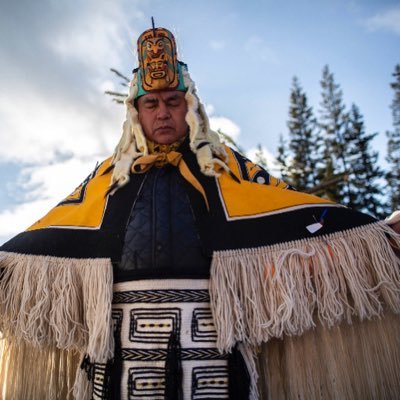
You were privileged yesterday morning to hear a Chief speak. That’s an unusual thing. Quite often, it’s the voice boxes or the galdmalgyax, as I indicated to you earlier, that speak on behalf of our protectors.

You’ve heard me talk about how the Chiefs have a responsibility to protect these lands and all of our people. That’s their job. They have no choice but to do that. And the speakers speak because they can make mistakes and the Chiefs can call them over and correct them. That’s why we have speakers.

But the Chiefs, when they say something, right or wrong, it’s the law. And so whatever they say becomes our law. And you’ve seen that.

And despite the fact that the Chiefs are pushed up front and they, indeed, are pushed up front and so are the speakers, what really runs our society is our matriarchs. We are a matrilineal society, and all of our rights and all of our titles, all of our stories and all of our knowledge comes through the women. It doesn’t come through the men. The men are just privileged to be placed in that position.

So you’ve heard from our adult women and you’ve heard from our young women. You’ve heard real fear, you’ve heard anxiety, you’ve seen young people who are absolutely totally consumed by what’s being presented to them right now.

I have 16 grandchildren who feel just exactly the same as the two young ladies you listened to yesterday. I have one grandson who said to me, “Poppa, are you going to protect the whales and the bears?” I guess you know what my answer is.

You’ve listened to these gentlemen beside me talk about their intricate knowledge of each and every rock and shoal and deep spot. You heard from my nephew at the far end talk about squalls and Squally Channel that have reached up to 150 knots. These are not exaggerations. These people encounter these things in these waters. We run for cover when we see these things coming.

Our Elders teach us to watch the signs because our people can see that. We judge it by the whales, we judge it by the birds, we know when things are coming and because of our intimate knowledge of that we have rarely ever lost anyone to the sea.

These men of the ocean are knowledgeable and respectful of the sea. They have been involved in so many rescues in this area that you can’t count them. This is a very, very dangerous area. When the north winds come out of that Douglas Channel they have been known to freeze up ships and sink them.

You can’t cross that going south or north because the freezing spray that comes out of Douglas Channel ices up one side of the ship and if you only get ice on one side of your ship you’re going to tip over. They have warned ships not to do that and when people don’t heed many of those ships have never been seen again in these waters.

Our people have gone out in those same weather conditions, my nephew Henry, down at the end, his brother went out and rescued a family who were out there whaling and thought that their lives were over because their engine had stopped and they were stuck out there. He was given a Medal of Valour by Canada for his courage. But each and every one of these people in this room have done the same thing at one time or another and it’s just their nature, that’s just what the Gitga’at people do.

When the Queen of the North went down and they jumped in their little skiffs and ran out there it was seen as a major heroic effort by Canada and British Columbia but it’s just their nature. They’re used to going out there in the middle of the night, that’s when they harvest their shellfish. So they knew what they were doing, they know what they had to do.

When that ship went down Bruce’s niece was onboard and because she had travelled with her grandfather up and down these channels for years and years, when the Queen of the North began to go along the shore within, you know, 30 yards, 10 yards, 10 feet, she thought this was normal because our people hugged the shore and worked with the tides, and Simon Reece was the best at that; we don’t fight the tides, we go with them. And if you’ve got a big tide you hug the beach.

So this young lady was outside looking at the stars and all of sudden branches started hitting the ship and then she hears these large screeching noises as it ran ashore. She had just assumed that it was doing what her grandfather did, and so that’s part of the reason that all these man ran out to save that.

The waters outside of our territory are ranked by Transport Canada as the fourth most treacherous waters in the world and for good reason.

My friend down further here, Chris, he goes out every week monitoring what’s going on with the Queen of the North and every time he goes out there he sees what are called the tears of Foisy and Rassette, the two people who are still onboard that ship, if the oil bubbles up from there, he gets to see that everyday.

You heard my nephew on the end talk about not being able to fish there anymore. He could fish there but it’s against our custom; there are two people resting there.

Ironically, their daughters were not able to take BC Ferries to court because they didn’t have the $40,000 necessary to do that. They got a couple hundred thousand dollar settlement about 100 of it went to the lawyers and so those two young ladies were left to rebuild their lives without their parents, with $100,000 which was kind of a crime.

You have heard from the heavenly children, which are black fish, the black fish descended from heaven. Their crests are the sun and the moon and the stars and the rainbows and thunder and lightning. They’re related to the Gitsan and the Niska. You’ve heard from the eagles, Sinaxeet, which is a Haida name. The Haida have a — for their eagles they have a Tsimshian name, they have Gitxan, which is the name that my brother Bob wears. They traded names at one time so that they would know that they were related.

So when you go into Skidegate you will likely meet a Chief by the name of Gitxan they say. That Chief is related to these eagles here. That’s part of our family, the Gu thlaag eagles.

We have relations with the Heiltsuk and the Haisla. The main Chief of the Heiltsuk’s name is Gwii’la but when he was born he was given the name Ha’eis. That’s the same name as Clare wears here. He was given by that by the grandmother of all of these people, the late Lucy Clifton, put that name on him as a young prince because he was going to be the leader of the Heiltsuk people and he is that today, he’s their highest Chief Gwii’la.

But he’ll always correct you; he says, “My name is Ha’eis. That’s the only name I ever knew until I went to school and somebody told me my name was Moody”. But he grew up with the name Ha’eis and every time I see him and I say “Hello Gwii’la”, he says, “My name is Ha’eis. I’m part of the Gitga’at.”

And you have heard fromWii Hi’waas of the ravens, and our ravens carry a lot of — a lot of the learning legends, T’xamsn, who taught us all about the sun and all of the trickery and all of the knowledge and everything comes through the ravens.

The ravens are also known for being very close to their cousins amongst all of the other Tsimshian in other areas and more often then not they would come together to protect their territories.

You heard Wii Hi’waas with his intimate knowledge about the ocean and having been out there talking about rocks and shoals and everything else. And you heard our raven Chief. We did talk about his traditional territory on Princess Royal Island, and his relationship with his father and his uncles.

The one thing that you haven’t heard much about while you’ve been here is another tribe that comes from the ocean, these are the Gitnuginaax people and you haven’t heard much about them today because they’re in mourning, they lost their Chief and they haven’t — they’re still in that mourning period.

These are the people who come from the sea, their crests are the starfish and the urchin and the whales and abalone and sea lions and sea lion armour and they truly do come from the sea. And their lands are outside of Aristable Island, you saw Henry and others talking about Moore Island, Anderson Island and all of that, that’s where these people come from, that’s their history.

There are killer whales that come from there, there are eagles that come from there and there are ravens that come from there and they’re amongst us and they’ve talked to you but they haven’t talked in depth about who they are.

You have seen — you will end up going into Kitasoo and likely Kitkatla and you will also see Na’gunaks’s people. Because when the white man came this tribe split into three; a third of them came to Gitga’at, a third went to Kitasoo and a third went to Kitkatla. So you’ll hear many of the same stories of those people and should know that.

When you hear about overlaps between First Nations don’t believe there’s overlap, we’re integrated, we’re closely related, we share territories and this is one of the main ones that we share.

You see a land and an ocean that is unencumbered by others. You’ve come into a territory where the only people that live here at Gitga’at. It’s very unusual in this province. We have a few others who have lived amongst us here, you have — but all of those people get adopted, become Gitga’at soon enough. You’ve seen Herman and others being adopted and having names.

There’s no accident that we’re the only ones here; wars were fought for this land. You’ve heard about Bruce and others talk about the manmade island. That was to thwart invaders.

The Gitga’at and other Tsimshian had a lot to do with what the geography of the coast of British Columbia looks like. There was a time when the Tlingits, the Tlingit wolves who have been pushed back into Alaska, extended down and occupied the islands outside of Aristable, out in the Moor Islands and that, and they also occupied Lowe Inlet, just around the corner over here and they had — they put up a toll gate of sorts.

They put a cedar gate there and tried to charge Tsimshian for going through there. So the Gitga’at called their neighbours, the Haisla, the Kitimat, the Kitlope, the Kemano and the Heiltsuk, and they put the run on the Tlingit out of there.

They absorbed some of them. They didn’t — our people weren’t into exterminating people. A show of force would generally get the job done. But they also eradicated them from the outer islands. And the Ravens who are up in the upper Tsimshian tribes, and the Laxkw’alaams tribes and Metlakatla tribes, they put together a warring party which pushed those Tlingits out of Metlakatla, out of Dundas Island and all of these other islands. And they pushed them right back up into Alaska.

The reason I’m telling you this is because these Tlingit had a close relationship with the Russians, and so the trading that happened on this coast, this whole geographic area, the Russians, because of the relationship with the Tlingits, claimed a certain part of the Pacific coast. And that area ended about 30 miles from Prince Rupert or Metlakatla. That area became known as the Alaska panhandle when it was bought off of the Russians.

The Russians claimed ownership of it because they had a relationship with the Tlingit. I tell you this because if we had not eradicated the Tlingit from here, no doubt the Russians would have been claiming right down to here and this would have been part of the Alaska panhandle. So that’s part of the history that a lot of people don’t understand. I wanted to share a little bit of that with you.

You have witnessed the peaceful nature of our people, which is our preferred route. You have witnessed our people embracing visitors like Herman and Janie and Ian and Norm. Dr. Suzuki has a name amongst us, and you have witnessed the high regard and respect our people have for you, and they truly do. You have shared and you have danced and you have laughed in our big house.

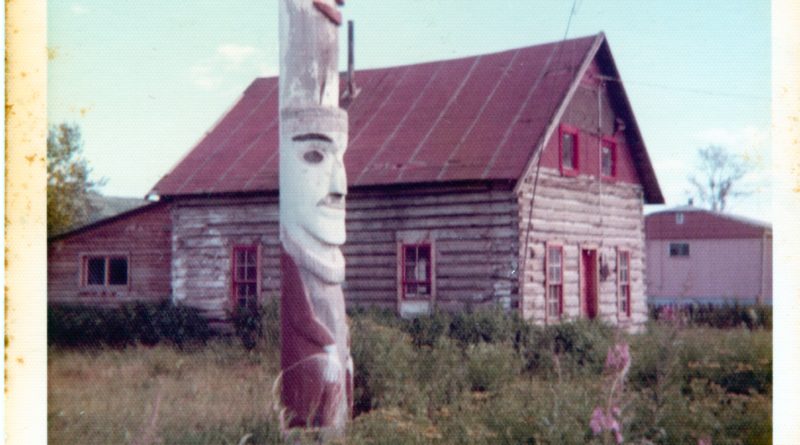
You have witnessed our art on the floor, you’ve seen our totem poles. You’ve sat in front of our crests and our murals, an art form that you see that has grown from the wealth of our land. The abundance of the resources from Vancouver Island to the Tlingit lands in Alaska gave rise to the most highly developed art form in the world.

You see the large sculpture, the jade sculpture in the Vancouver airport carved by Bill Reid. There are three of those sculptures; one is “The Black Canoe”, which is in Washington, D.C. and there’s another, “White Canoe”, which is in the Canadian Museum of Civilization in Ottawa.

The commission that was paid to that Haida artist that I trained under for some time was the highest commission ever in the history of the world paid to a living artist. He was paid over $5 million for that. No other living artist has ever received such a commission. And that’s because the world, not only the world but Canada and all others, have embraced this art that comes from this land.

15692. So why does it come from this land? It comes from this land because this land is so rich. Our people have had the time and the ability to develop structures and art like no other nations in Canada. That’s what our art represents. That’s what you see before you. These symbols are formal; they’re recognized by all of the tribes of the coast so that when we meet each other we recognize who we are, whether we’re Eagle or Raven or Blackfish or Wolf.

I have a few totem poles around the world myself. When you come out of the International Centre in Vancouver and you walk across the street to the parking lot, you’ll see three totem poles that I carved. When you go into the Vancouver Trade and Convention Centre, you’ll see the first two totem poles I ever carved.

I trained under people like Bill Reid and Robert Davidson and many others and I passed on some of that here. And so you’ve seen that art in the community here done by young fellows here, Bruce and Henry and all these others. It’s ingrained in us, it becomes part of us. You go to the Canadian Museum of Civilization, you’ll see a mural painted in there by Jesse and Stan and myself, and you’ll hear one of our Chiefs speaking.

You’ll also see in the Tsimshian house there two bowls that came from this community and they’re — I was curator in that, and I placed those two bowls up front. One is a seal and one is a wolf, and those bowls are a symbol of a relationship that the Gitga’at people had with the Heiltsuk people. And the Heiltsuk gave those to them in return for a good deed that that Gitga’at people did for them. That’s one of the symbols that you’ll see at the Canadian Museum of Civilization in Ottawa.

You have heard from our people about how government mismanages and annihilated our abalone. You’ve heard how we’ve been eliminated — how it’s eliminated us from our commercial fishing for halibut, crab, prawns, black cod, sea urchins, sea cucumber, gooey duck, all of these viable fisheries that we’ve been excluded from by various government mechanisms, yet you haven’t seen any poverty in this community. That’s because we still have all that we need to eat and sustain ourselves. That’s what you’ve heard everybody talk about here; it’s not about an economy.

You know, a culture, a society depends on its sustenance, and no matter what we got paid for any kind of job or any fish we sold, it could never compare to the value that all of these men and women have talked to you about over the last couple of days. It’s the very core and foundation of our culture and our society, and we’re still here and we always will be.

Why? Because as you heard one of our Chiefs, Wahmoodmx, thousands of years ago said, “We will move no more because the Creator gave us title to these lands and waters along with the responsibility to protect all of the plants and animals on the land and in the water”.

We know from experience that our well-being as Gitga’at is dependent on the health of our ocean, just as our forests and land animals are dependent on the ocean. How so, you might ask? You might ask as Panellists; why do people talk about stripping bark when that’s on the land and we’re talking about an ocean project?

Well, the reality is we live in what some call the Pacific salmon forest and our forest is fertilized by salmon. Our monumental cedars are in the areas where bears and wolves and ravens and eagles eat salmon and spread that nutrient throughout the forest to grow these great big monumental cedars that you see on the coast of British Columbia that exist nowhere else in Canada and allow us to make huge ocean-going canoes or totem poles. That’s the connection.

When we were doing land use planning in the Great Bear Rainforest our Elders told us, you can’t do just land use planning; our lands depend on the ocean. They depend on the salmon. We’re intricately related. That’s what you were hearing from some of our people, and so I’m trying to connect a couple of those dots for you.

As Gitga’at, we should have stopped the abalone fishermen from exterminating our food. I remember coming down here when the abalone licences were available and saying to our Chiefs, “Hey, guys, there’s abalone licences out there. You can go get one. They don’t cost anything.”

And I can remember our late Chief saying, “Are you crazy, you can’t dive for abalone. You have to go out and get that on the low tide otherwise you’ll wipe it out”. Well it wasn’t long; it didn’t take them a decade to wipe the whole thing out.

We should have stopped the seines from wiping out a lot of our salmon runs in this area and our herring runs, leaving us with barely enough to feed ourselves, which we’re okay with, but the whales need our food, the bears need our feed, the wolves, the ravens, the eagles.

What you have witnessed in your short time amongst us is a living and breathing society, an ancient culture intact in its natural habitat.

If we were marbled murrelet, spotted owls, treed frogs we’d be safe. While the Gitga’at are small in numbers there are 20,000 other First Nation souls living and thriving in the Great Bear, this place that contains 25 percent of the coastal temperate rainforest left on planet earth.

You and your grandchildren and ours will always be welcome here. You’re intelligent people with the integrity that has been put inside your bodies by your parents and your grandparents.

You were given an amazing power by the Government of Canada. This power angers some and scares others. You have the power to decide the future path which the Tsimshian, the Gitga’at, the Haisla, the Haida, the Heiltsuk, the Nuxalk and Owikeno take.

Our preferred path is one of peace and reconciliation or a massive campaign, along with 80 percent of the British Colombians who support us, to convince Canada that our culture, our society, our place is worth saving. This choice is yours, not ours, choose your path wisely.

Thank you for listening to us. Thank you.

— (Applause)  

  JLS ……For What It’s Worth

Print Friendly
Share
 Posted by at 3:07 pm